All eyes are on the Middle East. They have been for decades, but in this hour, the intensity has escalated. Governments are recalibrating alliances. Intelligence agencies are on high alert. Economies tremble with every shift in that region. The media cycle rarely drifts far from its borders. What happens there sends shockwaves across continents.
But while the world watches for war, heaven watches for harvest.
We are living in a moment of convergence. Political instability, religious tension, technological access, demographic shifts, and prophetic destiny are colliding in the same geographic space. The Middle East is not just a geopolitical hotspot. It is a covenantal crossroads.
Join us in prayer at Awakening Prayer Hubs.
Isaiah 19 reveals something most intercessors must keep top of mind. The prophet declares:
“In that day there will be a highway from Egypt to Assyria, and the Assyrian will come into Egypt and the Egyptian into Assyria, and the Egyptians will serve with the Assyrians. In that day Israel will be one of three with Egypt and Assyria—a blessing in the midst of the land, whom the Lord of hosts shall bless, saying, ‘Blessed is Egypt My people, and Assyria the work of My hands, and Israel My inheritance.’” (Isaiah 19:23–25 NKJV)
Egypt was a place of bondage. Assyria was an instrument of judgment. Both were historic enemies of Israel. Yet the Lord speaks of a day when these nations are joined by a highway and called blessed. He does not speak of annihilation. He speaks of redemption.
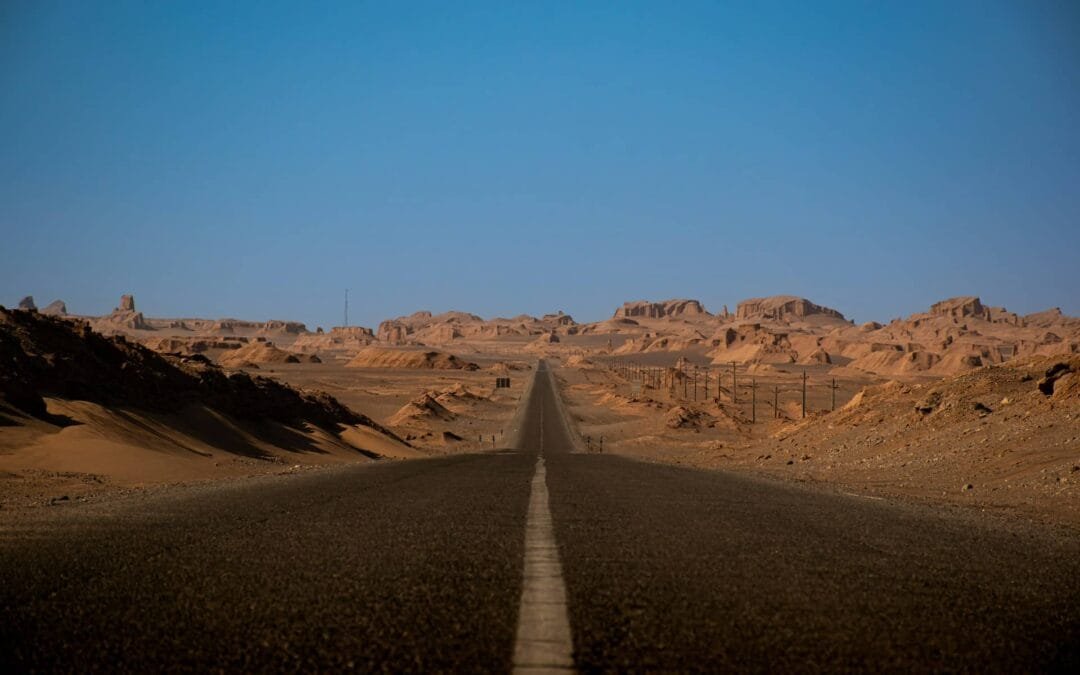
The highway in Isaiah 19 is not merely infrastructure. It is spiritual access. It represents reconciliation, worship, and covenantal alignment in a region defined by hostility.
That prophecy has not expired.
If anything, the current shaking underscores its significance.
Whenever a territory carries an extraordinary prophetic destiny, it also carries extraordinary contention. The Middle East sits at the intersection of biblical history, global commerce, and spiritual warfare. The birthplace of the Church remains the epicenter of global tension. That is not accidental.
The enemy fights hardest where God has promised the greatest impact.
Consider the early church. Jerusalem was not a place of comfort. It was a city under Roman occupation. Antioch was culturally complex and politically charged. Damascus was a stronghold until it became the site of Paul’s transformation. The Gospel spread from contested ground.
The Middle East is not foreign soil to revival. It is foundational soil.
Jesus’ words in John 4:35 are instructive: “Lift up your eyes and look at the fields, for they are already white for harvest.” He spoke those words in a region divided by ethnic and religious hostility. Yet He saw readiness where others saw resistance.
We must ask ourselves: what do we see when we look at the Middle East? Do we see only conflict? Do we see only extremism? Do we see only persecution statistics? Or do we discern the possibility of harvest in the midst of shaking?
Reports continue to emerge of dreams and visions of Jesus throughout parts of the Middle East. Underground fellowships are multiplying quietly. Digital access is bypassing barriers that once seemed impenetrable. Young people disillusioned with violence and ideological rigidity are searching for something more.
If God intends the Middle East to become a blessing, then there must be a harvest. There must be a transformation. There must be reconciliation that only the Gospel can accomplish.
Intercessors must shift from reacting to headlines to contending for prophecy.
Psalm 2 asks, “Why do the nations rage?” (NKJV) The answer is not merely political. It is spiritual. The rage of nations often reflects deeper spiritual resistance to the purposes of God. But Psalm 2 also reminds us that the Lord sits enthroned.
This is a critical hour not because the region is unstable, but because the opportunity is immense. The shaking is exposing cracks in long-standing structures. And whenever structures shake, hearts become more open.
Jesus called it His harvest in Matthew 9:37–38. “The harvest truly is plentiful… Therefore pray the Lord of the harvest to send out laborers into His harvest.”
The Middle East belongs to the Lord of the harvest.
That truth should anchor our intercession.
We must pray for courage for believers in restricted nations. We must pray for divine protection over evangelists and house churches. We must pray for supernatural encounters with Christ. We must pray for laborers to be sent. We must pray for the Isaiah 19 highway to be established in the spirit realm before it is fully visible in the natural.
This is a time for focused, informed, Scripture-rooted intercession. The world may be fixated on escalation. The Church must be fixated on redemption. The headlines may speak of war. Heaven speaks of harvest.
Lift up your eyes. The fields are ready.